

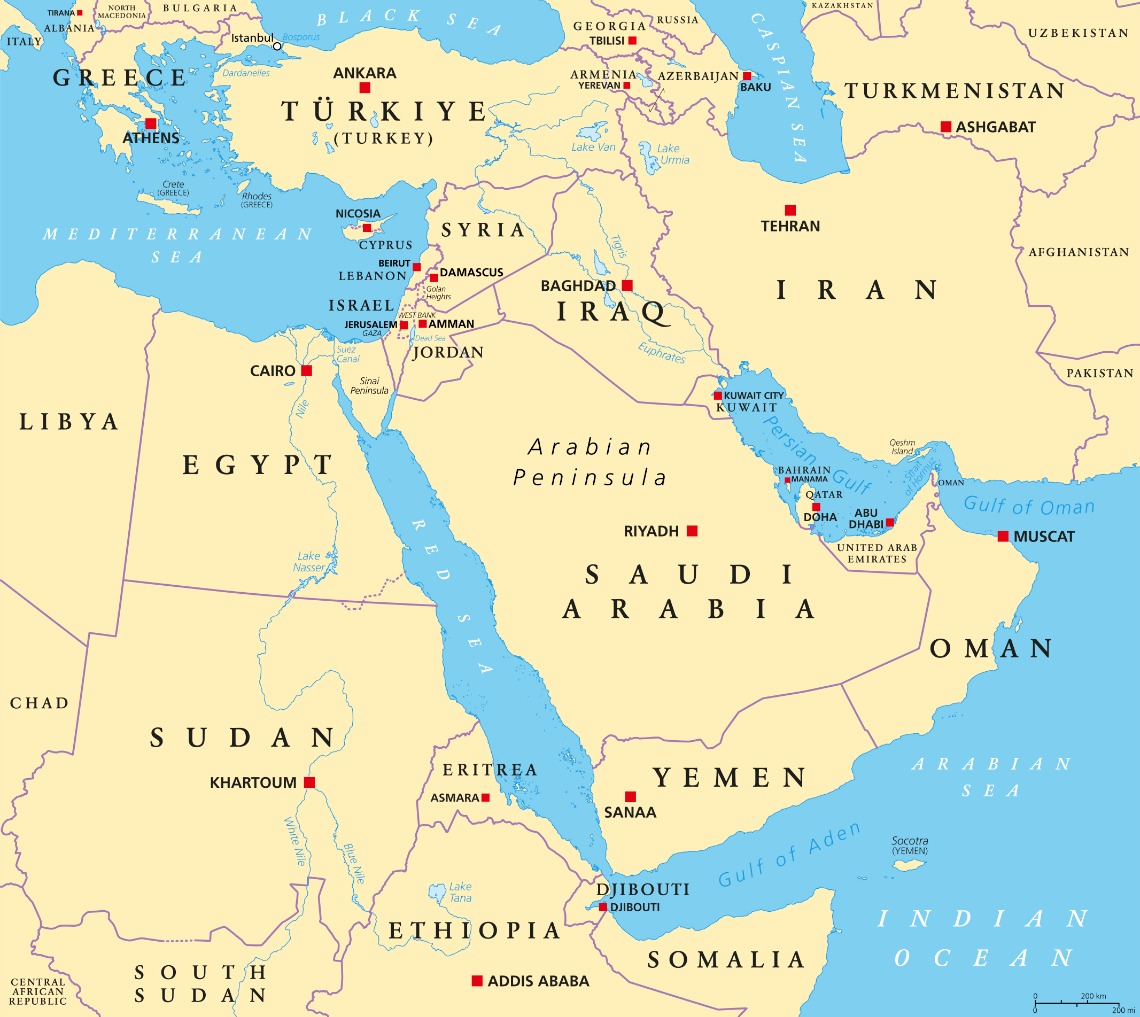
The recent escalation in the Middle East has once again drawn the attention of many market participants to one of the world’s most important maritime trade routes: the Strait of Hormuz. Around 20 million barrels of crude oil pass through this narrow waterway every day—roughly 20% of global seaborne oil trade. In addition, approximately 20% of global LNG shipments also transit this route.
Given its significance, energy markets react very sensitively to any potential disruptions in the region. Beyond the immediate energy dimension, however, there are several structural aspects that often receive less attention in public discussions but are equally relevant from an economic perspective.
Food Supply
Many countries in the Persian Gulf region have limited agricultural production due to climatic and geographic constraints. As a result, they rely heavily on food imports.
A significant portion of these imports is transported via maritime routes in and around the Strait of Hormuz. A prolonged disruption to shipping routes could therefore impact not only energy markets but also regional food supply chains.
Water as a Critical Factor
The Gulf states are among the most water-scarce regions in the world. Much of their drinking water supply is secured through seawater desalination plants.
These facilities are highly energy-intensive, making water supply strongly dependent on stable energy infrastructure. In periods of geopolitical tension, this close link can create additional vulnerabilities—particularly if energy infrastructure or transport routes are disrupted.
Financial Importance of the Region
The extensive oil and gas exports of the Gulf states form a central pillar of the petrodollar system. A large share of these revenues is reinvested globally through sovereign wealth funds and international financial markets.
Disruptions to energy exports could therefore affect not only commodity prices but also global capital flows and financial markets.
Effects Along the Supply Chain
Geopolitical tensions influence markets through more than just rising crude oil prices. Costs along the entire supply chain can also increase.
These may include higher insurance premiums for tankers, rising transportation costs, and additional risk compensation for crews operating in potential conflict zones. At the same time, financing costs may increase as banks demand higher margins in uncertain environments.
Another factor is that many countries begin to replenish strategic energy reserves, which can generate additional demand.
Taken together, these dynamics can lead to a situation in which end products such as heating oil or gasoline rise more sharply in price than crude oil alone would suggest.
Assessment
Against this backdrop, we continue to closely monitor geopolitical developments and their potential economic implications. At the same time, we continuously assess possible consequences for energy prices, supply chains, and capital markets.
In one of our upcoming Investment Updates, we will also outline how we have positioned our various portfolios in response to these developments and which measures we have taken as part of our risk management framework.
If you would like to receive such insights directly and in a timely manner, we invite you to subscribe to our Investment Update.