

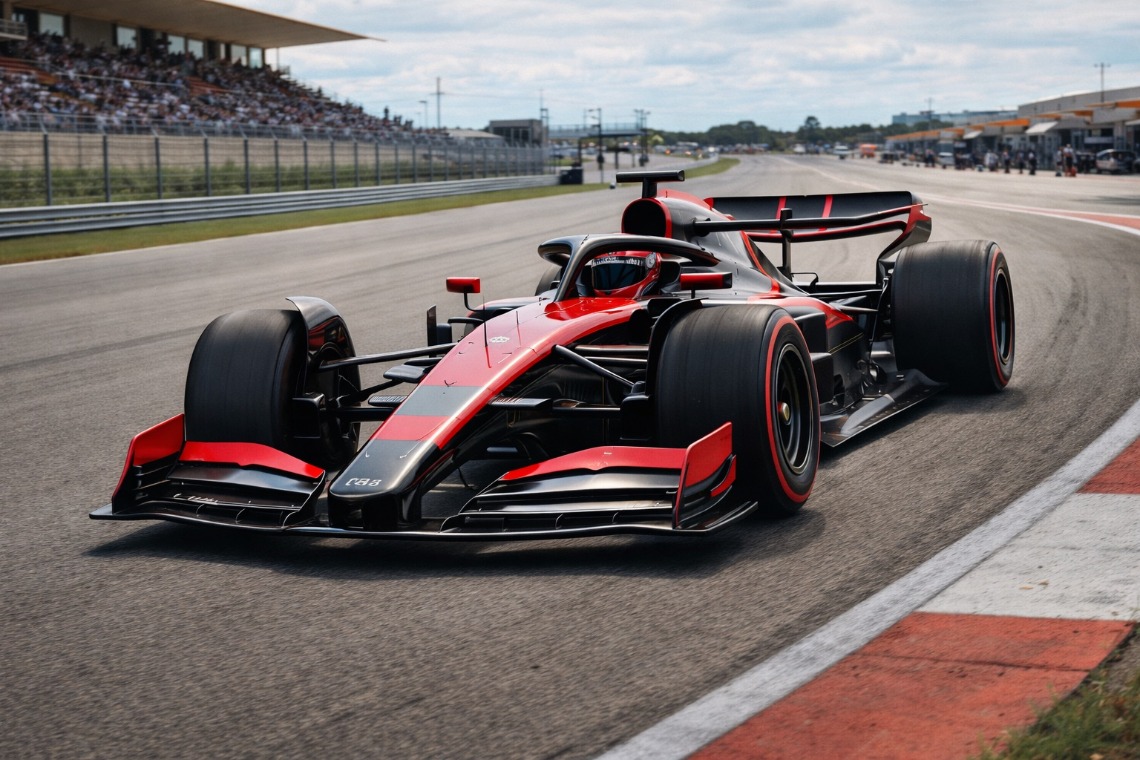
Hydrogen e-fuels are increasingly moving into focus within the global energy transition. With the start of the new Formula 1 season, a notable technological step has been taken: for the first time, synthetic e-fuels are being used in racing conditions. What may initially appear to be an experiment in motorsport could ultimately become an important catalyst for the broader industrial energy transition.
Formula 1 is far more than a sporting competition – for decades it has served as a high-performance technological laboratory. Innovations that prove themselves under extreme conditions often later find their way into industrial applications.
This dynamic opens up an interesting structural theme for investors.
How E-Fuels Are Produced
Synthetic fuels – commonly referred to as e-fuels – are created through a multi-step technological process. The objective is to produce liquid energy carriers that are chemically comparable to fossil fuels but can be manufactured in a climate-neutral way.
The production process consists of three central steps:
1. Electrolysis
Using renewable electricity, water is split into its components. This process produces hydrogen, the key energy carrier in the entire production chain.
2. CO₂ Capture
In the next step, carbon dioxide is captured either directly from the atmosphere or from industrial processes. Combined with hydrogen, it can first be converted into methanol.
3. Fischer–Tropsch Synthesis
In a subsequent chemical process, methanol is converted into synthetic hydrocarbons, forming the basis for climate-neutral gasoline and other synthetic fuels.
The strategic core of this entire process is clear: hydrogen.
Without hydrogen, synthetic fuels cannot be produced.
Formula 1 as an Innovation Platform
Motorsport has repeatedly acted as a catalyst for technological development. Technologies such as hybrid drivetrains, energy recovery systems and advanced materials were initially tested in racing before eventually reaching commercial applications.
With the introduction of e-fuels, Formula 1 is pursuing a similar goal: testing new technologies under extreme performance conditions and accelerating their industrial scalability.
Synthetic fuels could play a particularly important role in sectors that are difficult to electrify, such as aviation, shipping and heavy transport.
Hydrogen as a Strategic Key Technology
hydrogen is increasingly emerging as a strategic key technology.
It fulfills several roles in the future energy system:
-
Energy storage for renewable power
-
Feedstock for synthetic fuels
-
Decarbonization of industrial processes
-
A transportable energy carrier
These characteristics position hydrogen as a central pillar of the global energy transformation.
Geopolitics Accelerating the Energy Transition
Alongside technological progress, the geopolitical landscape is playing an increasingly important role.
The current conflict in the Middle East once again demonstrates how strongly Europe still depends on oil and gas imports. Political tensions can immediately translate into energy price volatility, supply risks and economic uncertainty.
In this context, hydrogen gains additional strategic importance. As a storable energy carrier and the basis for synthetic fuels, it can help to:
-
diversify energy imports
-
strengthen energy security
-
relocate industrial value creation closer to Europe
The development of hydrogen infrastructure is therefore becoming not only an environmental issue but also a question of economic resilience.
Investment Perspective: Structural Growth
Against this backdrop, we position our Hydrogen Portfolio strategically along the entire value chain – from electrolysis technologies and infrastructure to applications in synthetic fuels.
The portfolio’s development increasingly reflects that markets are beginning to differentiate and recognize the sector’s long-term potential.
Following a strong performance last year (+32%), the portfolio has also delivered a robust performance in the current year (+16% YTD).
The sector remains volatile. However, structural trends such as decarbonization, energy independence and technological innovation support long-term growth potential.
Outlook
The introduction of e-fuels in Formula 1 illustrates how rapidly new energy technologies can evolve. Technologies currently tested in motorsport could soon become part of the global energy and mobility strategy.
Synthetic fuels may become particularly relevant in sectors that are difficult to electrify – including aviation, shipping and heavy transport. The foundation of these technologies remains hydrogen.
International Perspective on E-Fuels
International energy organizations also see e-fuels as an important tool for decarbonizing hard-to-electrify sectors. An analysis by the International Energy Agency (IEA) highlights that synthetic fuels produced from hydrogen and CO₂ could play a key role for aviation, shipping and industrial applications.
Further reading:
https://www.iea.org/reports/the-role-of-e-fuels-in-decarbonising-transport
Investment Perspective in the Hydrogen Sector
For investors, this creates a structural growth opportunity across the hydrogen value chain – from electrolysis and infrastructure to synthetic fuel applications.
An overview of our thematic investment strategies and portfolios can be found here:
https://globalstrategic.ch/#expertise